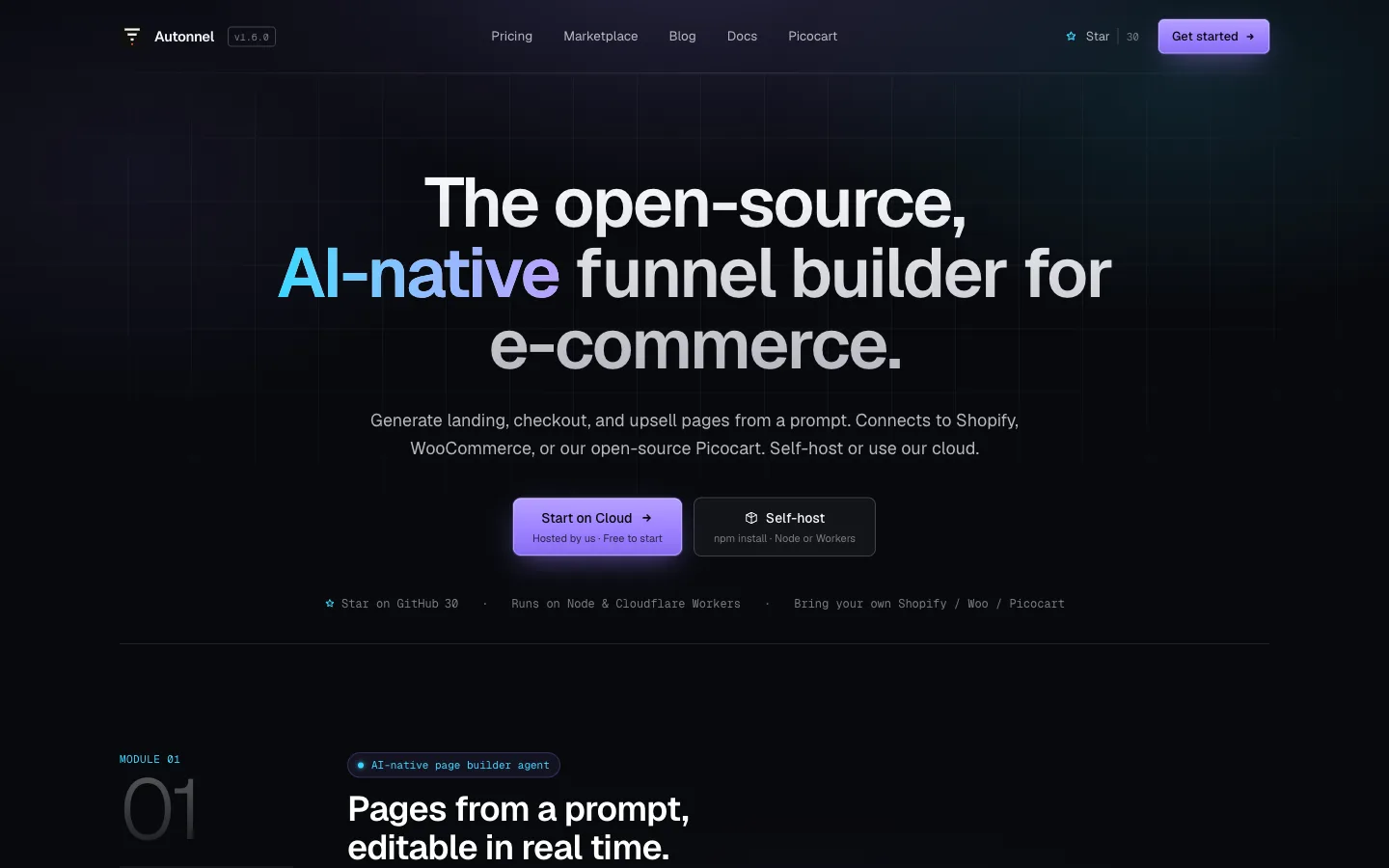

Autonnel is an open-source, AI-native funnel builder for e-commerce. Generate landing, checkout and upsell pages from a prompt, then connect them to Shopify, WooCommerce or the open-source Picocart. A build agent composes real components onto the page, and a scheduled analysis agent runs your funnel data through your own LLM and alerts the team when a step slips. It ships with an MCP server and scoped API keys so agents can read and write funnels, pages and orders. Other modules include server-side ad postbacks to Meta, TikTok, Google and Bing, one-click post-purchase upsells on the saved card, funnel-level A/B tests, multi-step abandonment recall, and many domains on one deployment. Self-host it for free on Node, Docker or Cloudflare Workers under Apache-2.0, or use the managed cloud at a flat $29 a month with no revenue share.
Gallery
Alternatives to Autonnel
All Ecommerce platforms tools
cloudpayX
We empower businesses to accept instant, secure, and zero-friction crypto payments, bypassing outdated systems (Xrp native gateway)

Vibe Coded
Vibe Coded is a marketplace for discovering, buying, and selling AI assisted (“vibe coded”) software projects including apps, games and websites.

FeedbackWall
FeedbackWall enables you to collect valuable user feedback using beautiful, customizable in-app surveys specifically designed for iOS applications.

Zenor AI
Zenor AI is a multimodal Shopify assistant that helps customers shop via text, voice, or photo while boosting sales and reducing support....
AmazingPlugins
A house of plugins for WooCommerce. Small, sharp, free tools for real store problems.

WebPlatform
WebPlatform brings together the everyday tools businesses use to manage customer enquiries, appointments, marketing campaigns and online sales. Businesses can use CRM and lead management to keep track of enquiries, organise email and WhatsApp follow-ups, and manage appointment-based services. WebPlatform also supports website and ecommerce workflows, including WordPress and WooCommerce integrations. The goal is to make customer follow-ups easier to manage and help businesses spend less time switching between separate tools.